Aetna Behavioral Health Reimbursement Rates in Texas (2026)
Aetna’s Texas HMO network pays a median of $130.22 for a 60-minute therapy session. Most clinicians are listed at three rates for that one session, and the file does not say which one applies to them.
The rates come from Aetna Health Inc., the company the Texas Department of Insurance licenses as Aetna’s HMO in the state. Its two network files cover employer group plans sold as Aetna Open Access Health Network Only and Health Network Option. Aetna’s PPO and self-funded employer plans publish separate files and are not included here.
We read both files for September 2026, 9.5 gigabytes of pricing data once unzipped. We kept negotiated and fee schedule rates billed as professional claims, and dropped rates Aetna labels as derived, percentage or per diem. We also dropped reduced and discontinued services, billed with modifiers 52 and 53. Each NPI was matched against the federal NPPES registry, and we kept behavioral health clinicians whose practice address is in Texas. Statistics are computed over unique provider-rate pairs.
Aetna’s Negotiated Behavioral Health Rates in Texas
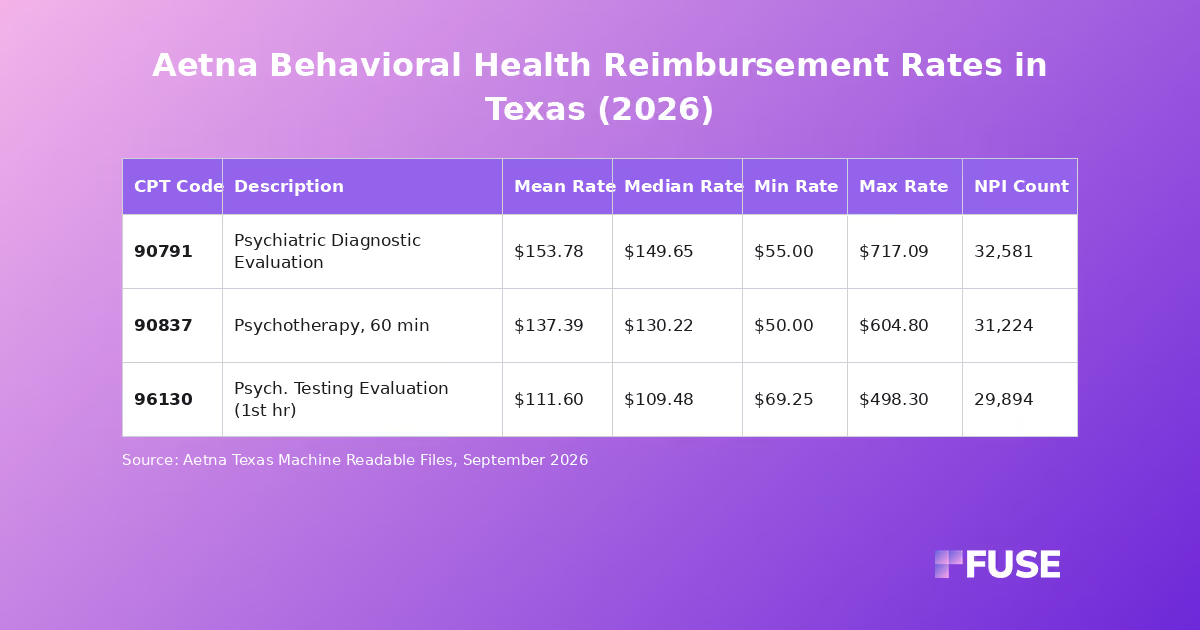
The table covers 31,224 Texas clinicians with a rate for 90837, the 60-minute therapy code.
| CPT Code | Description | Mean Negotiated Rate | Median Negotiated Rate | Min | Max | Unique NPI Count |
|---|---|---|---|---|---|---|
| 90791 | Psychiatric Diagnostic Evaluation | $153.78 | $149.65 | $55.00 | $717.09 | 32,581 |
| 90837 | Psychotherapy, 60 minutes | $137.39 | $130.22 | $50.00 | $604.80 | 31,224 |
| 96130 | Psychological Testing Evaluation, 1st hour | $111.60 | $109.48 | $69.25 | $498.30 | 29,894 |
Rates extracted from Aetna’s September 2026 Texas machine readable files.
The average for 90837, $137.39, sits a few dollars above the median, so a handful of high contracts is not driving the numbers. The full range runs from $50.00 to $604.80. The more useful spread is inside each clinician’s own listing, explained next.
Why Does Aetna List Three Texas Rates for the Same Therapy Session?
The file does not say. What it does show is a fixed pattern. About four in five Texas clinicians have their 90837 rates in sets of three, and almost every set follows the same 15 to 17 to 20 ratio.
- The low rate. About 12 percent below the middle rate.
- The middle rate. For example $127.51 in Dallas-Fort Worth.
- The high rate. About 18 percent above the middle rate.
The same ratio shows up for 90791, the diagnostic evaluation. Nothing in the file separates the three rates. They carry the same billing class, place of service and modifier, so the published data cannot tell you whether your claims pay the low, middle or high amount.
The gap matters. For a typical Texas clinician in the file, the lowest listed 90837 rate is about $109 and the highest about $181. Check your Aetna remittances for 90837 and see which of the three amounts Aetna actually pays you. If it is the low one, ask Aetna what puts you there. Our guide to negotiating insurance contract rates covers how to make that request.
Does Aetna Pay More in Houston Than in Dallas for Therapy?
Slightly. Houston’s most common middle 90837 rate is $129.21, about 1 percent above Dallas-Fort Worth’s $127.51. The regional steps are small.
- Houston. Middle rate $129.21.
- Dallas-Fort Worth. Middle rate $127.51.
- San Antonio. Middle rate $127.50.
- Austin. Middle rate $127.22.
- El Paso. Middle rate $123.98, the lowest of the large metros.
We grouped clinicians by the ZIP code on their NPPES practice address, so treat the boundaries as approximate. The metros match the service areas Aetna Health Inc. reports to the Texas Department of Insurance. About 14,000 clinicians across the state, most of them counselors and social workers, also appear under a statewide set of six rates from $93.28 to $196.24. That set follows the same ratio, twice over.
Do Psychologists Get Paid More Than Counselors by Aetna in Texas?
Not at the median. Aetna’s 90837 median is $127.51 for psychologists and $130.22 for licensed professional counselors, clinical social workers and marriage and family therapists.
- Counselors, social workers and family therapists. Median $130.22.
- Psychiatric nurse practitioners. Median $129.21.
- Psychologists. Median $127.51.
- Psychiatrists. Median $138.41, though many psychiatrists bill medication visits with other codes.
Testing follows the same flat pattern. The 96130 median is $108.55 for psychologists, against $109.48 for all clinicians. Aetna lists each rate for a group of providers, and a group can include several license types, so a psychologist can carry the same listing as a counselor. A psychologist whose Aetna rate matches a counselor’s has a specific question to raise at renewal.
How Does Aetna Compare With Blue Cross Blue Shield of Texas for Therapy?
Aetna pays more at the median for all three codes. The gap is widest for evaluations and testing.
- 90791 evaluation. Aetna $149.65, Blue Cross Blue Shield of Texas $120.71.
- 90837 therapy hour. Aetna $130.22, Blue Cross Blue Shield of Texas $117.91.
- 96130 testing. Aetna $109.48, Blue Cross Blue Shield of Texas $90.68.
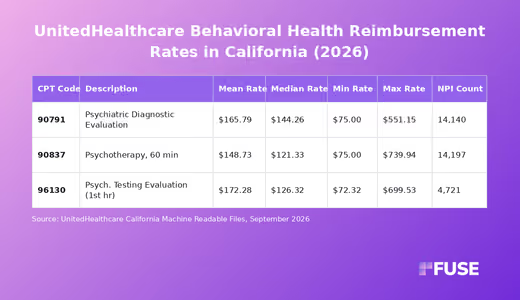
The Blue Cross figures come from its August 2026 files, covered on our Blue Cross Blue Shield of Texas behavioral health rates page. Those files include its PPO networks, while this page covers Aetna’s HMO only. Our 90837 rates by state page compares Blue Cross Blue Shield of Texas with five other Blue plans. UnitedHealthcare’s Texas median for 90837 is $110.30, from the national Optum behavioral health file for September 2026 that our UnitedHealthcare California rates page covers.
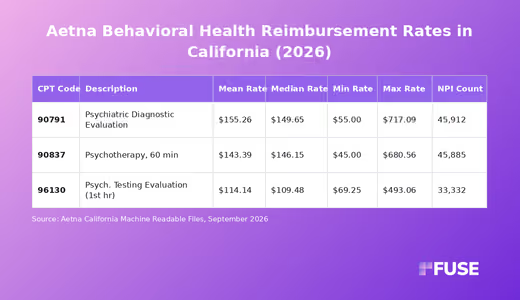
Aetna’s Texas and California HMOs share two medians to the cent. The 90791 and 96130 medians match our Aetna California rates exactly. The 90837 median is about $16 lower in Texas.
Does Aetna Have to Pay the Same Rate for Telehealth Therapy in Texas?
No. Insurance Code section 1455.004 requires state-regulated plans to cover telehealth from in-network clinicians on the same basis as an in-person visit. It says nothing about the payment rate. The patient’s deductible, copay or coinsurance cannot be higher than for the same service in person.
Two limits in the same chapter matter for therapists.
- Phone-only visits. Plans do not have to cover a service delivered only by audio, such as a phone session.
- Small employer plans. The telehealth chapter does not apply to plans written for small employers, so a small business’s Aetna plan can treat telehealth differently.
A 2025 bill, HB 5343, would have added rate parity. It was referred to the House Insurance Committee on April 7, 2025 and did not move after that. The state’s statute site lists the code as current through the 2025 sessions, and we found no parity requirement in the chapter as of October 6, 2026. The chapter does require Aetna to post its telehealth policies and payment practices on its website, though not its contracted rates.
The file gives little to compare. Fewer than 50 Texas clinicians have a separate 90837 rate with a telehealth modifier. For almost everyone, the claim simply pays the listed rate. If your contract says telehealth pays less, that is a contract term and not a Texas rule.
How Fast Must Aetna’s Texas HMO Pay a Clean Therapy Claim?
Within 30 days of receipt for an electronic claim and 45 days for a paper claim. Insurance Code section 843.338 sets those deadlines for HMOs like Aetna Health Inc., for clean claims from in-network clinicians. The Texas Department of Insurance counts day one as the day after the HMO receives the claim.
Paying a clean claim late adds a penalty on top of the contracted rate, under section 843.342. The days count from the payment deadline.
- 1 to 45 days late. Half of the difference between your billed charge and the contracted rate, up to $100,000.
- 46 to 90 days late. The full difference, up to $200,000.
- More than 90 days late. The same penalty as 46 to 90 days. The HMO also owes 18 percent annual interest, but the law sends that interest to the state, not to you.
If Aetna pays part of a claim on time and the rest late, the penalty applies to the late share. Section 843.353 says a contract cannot waive these rules. Report underpayments within 270 days of the payment. If you report one later and the HMO pays the balance within 30 days of your notice, it owes no penalty.
What This Means for Your Practice
Use these numbers with caution. They come from Aetna’s two Texas HMO files only, so they say nothing about what Aetna’s PPO or self-funded employer plans pay. Even inside the HMO files, most clinicians carry three rates for the same session, and nothing in the data says which one Aetna pays.
So the median shows where Aetna’s Texas listings cluster, not what you are paid. On its own, this analysis cannot tell you whether your rate is low, fair or high. Your remittances can.
- Which rate you are paid. Compare what Aetna actually paid for 90837 and 90791 with the amounts in your agreement.
- Whether it was paid on time. Check each HMO payment against the 30-day deadline for electronic claims.
- Which plan paid it. Keep HMO and PPO payments apart, since Aetna prices them in separate files.
Fuse helps practices with this work. We run reimbursement checks against past claims and flag the gap between contracted and paid before it compounds. Reach out if you want a second look at your Aetna numbers.
Disclaimer: This article uses rate information from the Machine Readable Files that Aetna publishes under the federal Transparency in Coverage rule. The two Texas HMO files behind this analysis unpack to 9.5 gigabytes of raw pricing data that no spreadsheet can open. Fuse built its own software to extract and verify the figures above. This analysis covers a single payer and will not reflect rates from all available insurance options in Texas. Healthcare pricing and coverage policy change frequently, and individual circumstances affect actual payment. Practices should verify current rates directly with Aetna before relying on them for billing or negotiation decisions.
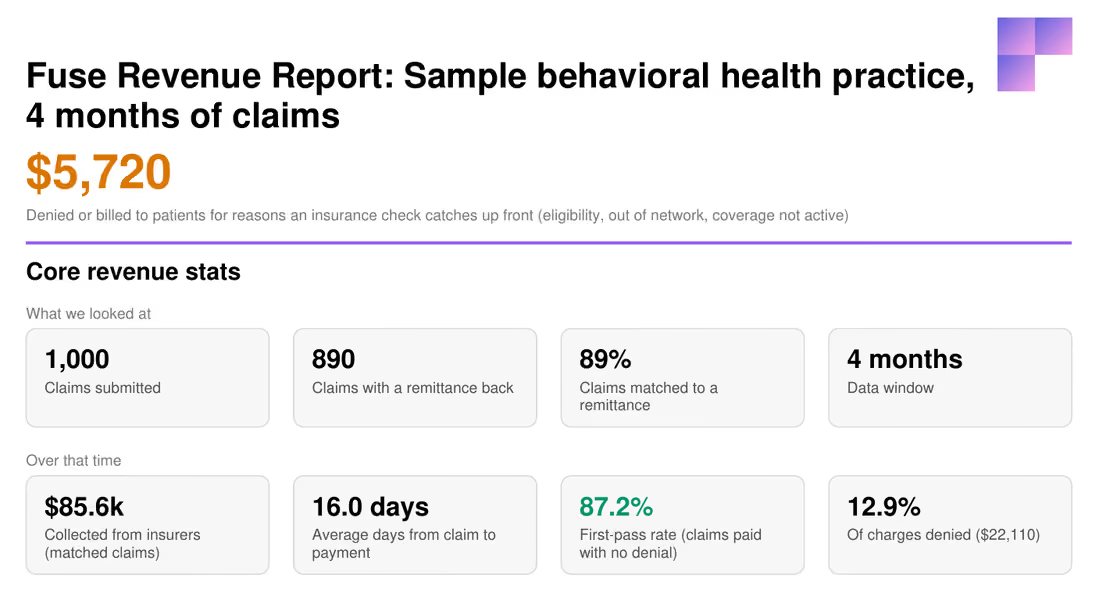
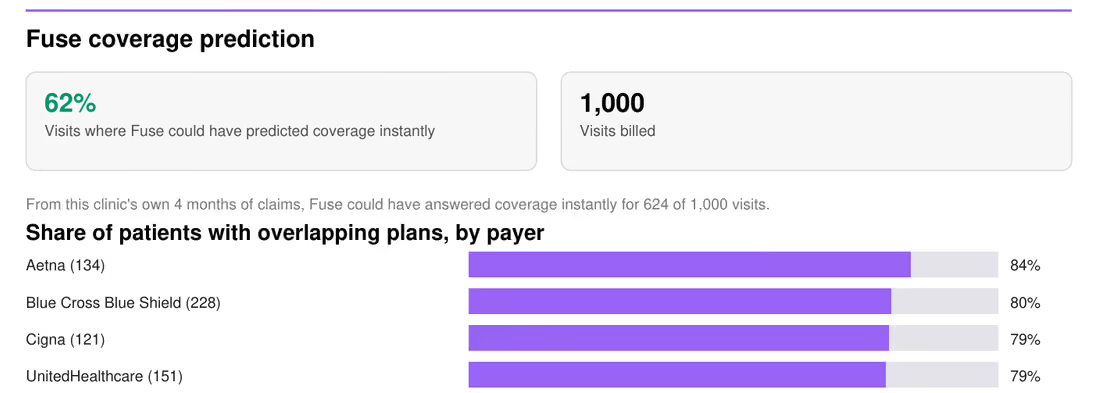

Fuse builds a model of payer behavior from your claims: underpayments flagged, lapsed plans caught, coverage predicted for scheduled patients.
Get Your Free Revenue AnalysisFAQs
Which Aetna plans use these behavioral health rates in Texas?
These rates come from Aetna Health Inc., Aetna's licensed HMO in Texas, and cover employer group plans sold as Aetna Open Access Health Network Only and Health Network Option. Aetna's PPO plans and self-funded employer plans publish separate rate files, so check the plan on the member's ID card.
Does Aetna's Health Network Only plan need a referral for therapy in Texas?
Aetna describes Health Network Only as an HMO plan where choosing a primary care provider and getting referrals are encouraged but not required. Coverage is in network only, except for emergencies, so confirm you are in Aetna's Texas HMO network before the first visit.
How do I find my own Aetna behavioral health rate in Texas?
Start with the fee schedule in your Aetna agreement and your remittances, which show the amount Aetna actually paid. Most Texas clinicians are listed at three 90837 rates, so the remittance is the only way to see which one applies. Compare it with the Texas median of $130.22.