UnitedHealthcare Behavioral Health Reimbursement Rates in California (2026)
UnitedHealthcare pays California therapists a median of $121.33 for a 60-minute session, exactly its median across the whole country. Behind that number is a short list of standard rates set by license and region, which makes UnitedHealthcare easier to read than most payers.
UnitedHealthcare’s behavioral health network is run by Optum, its sister company. Optum publishes one national rate file for that network, and UnitedHealthcare of California lists it in its own price disclosures. We read the September 2026 file and kept clinicians whose practice address in the federal NPPES registry is in California. We kept rates labeled negotiated and billed as professional claims, and computed statistics over unique provider-rate pairs.
UnitedHealthcare’s Negotiated Behavioral Health Rates in California
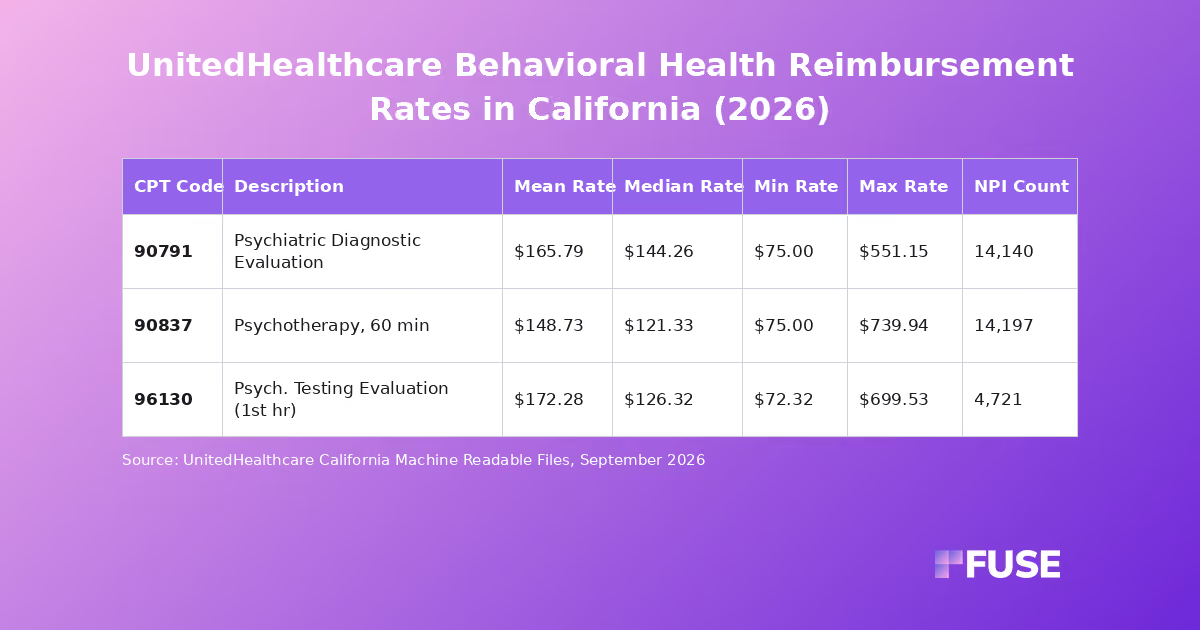
The table covers 14,197 California clinicians with a rate for 90837, the 60-minute therapy code.
| CPT Code | Description | Mean Negotiated Rate | Median Negotiated Rate | Min | Max | Unique NPI Count |
|---|---|---|---|---|---|---|
| 90791 | Psychiatric Diagnostic Evaluation | $165.79 | $144.26 | $75.00 | $551.15 | 14,140 |
| 90837 | Psychotherapy, 60 minutes | $148.73 | $121.33 | $75.00 | $739.94 | 14,197 |
| 96130 | Psychological Testing Evaluation, 1st hour | $172.28 | $126.32 | $72.32 | $699.53 | 4,721 |
Rates extracted from the Optum behavioral health file in UnitedHealthcare’s September 2026 California machine readable files.
The average for 90837, $148.73, sits above the median because a small group of contracts pays far more. The full range runs from $75.00 to $739.94. For most clinicians, the rate is one of a few standard amounts, explained below.
Why Do Most California Clinicians Get the Same Few UnitedHealthcare Rates?
Because most of them are paid from Optum’s standard fee schedule rather than a contract written for their practice. About 1 in 16 California clinicians in the file has more than one 90837 rate. At Aetna, more than nine in ten do.
The most common 90837 rate in California is $115.82, which covers about one in five clinicians on its own. Optum lists each standard rate once, for a group that can include thousands of practices across the country. That is why the same amounts keep repeating.
Optum says so in plainer terms. Its Provider Express claim tips say the rate “will vary by state, license type, and your network status.” The file shows a fourth factor inside California, which is where you practice.
Does UnitedHealthcare Pay More in the Bay Area Than in Los Angeles?
Yes, by about 5 percent per step, in three steps. For marriage and family therapists, clinical social workers and counselors, the most common 90837 rate depends on the practice address.
- Bay Area and Sacramento. $121.33 is the most common rate, held by nearly half of these clinicians.
- Los Angeles, Orange County and San Diego. $115.82 is the most common rate, again for about half.
- Inland Empire and the rest of the state. $110.30 is the most common rate, for about half.
Optum does not publish these regions. We grouped clinicians by the ZIP code on their NPPES practice address, so treat the boundaries as approximate. About half of the clinicians in each region sit on a different rate than the common one, usually a neighboring step.
How Much More Does UnitedHealthcare Pay Psychologists Than Therapists in California?
About a third more for a 60-minute session. The median 90837 rate is $154.42 for psychologists and $115.82 for marriage and family therapists and clinical social workers.
- Psychologists. Median $154.42, with steps at $147.07 and $161.78.
- Psychiatric nurse practitioners. Median $131.26.
- Counselors. Median $121.33, with the same three steps as therapists and social workers.
- Psychiatrists. Median $164.85, though many psychiatrists bill medication visits with other codes.
Testing is flatter. Psychologists make up about half of the clinicians with a 96130 testing rate, and their median of $126.32 matches the overall testing median of $126.32.
Do California Practices With Their Own Optum Contract Earn More?
Usually, yes. About 1,500 California clinicians have a 90837 rate that Optum lists for just one tax ID, which means one practice or organization, and their median is $131.00. Rates Optum lists across many tax IDs at once have a median of $121.33.
That gap comes with caveats. Some of these one-tax-ID rates cover organizations with 75 to more than 200 California clinicians, which have more negotiating weight than a solo therapist. About 170 clinicians appear under both kinds of rate. The file also does not show why a practice got its own rate or when. Read the $131.00 as what a practice-level agreement can look like, not as a rate Optum will offer on request.
How Do California’s UnitedHealthcare Rates Compare With Other States?
California sits in the middle. Among the 35 states with at least 1,000 behavioral health clinicians in Optum’s national file, 12 have a higher 90837 median, and Arizona ties California.
- Highest. Oregon, with a median of $189.06.
- Other large states. New York at $137.78 and Texas at $110.30.
- Lowest. Several states share a median of $104.79, including Kentucky and Indiana.
The state medians land on the same standard amounts again. Texas, Ohio and Michigan all sit at $110.30, the lowest of the three California steps. That pattern is how one national file can still pay a typical Bay Area therapist more than a typical Texas therapist.
How Long Can Optum Take to Credential a California Therapist?
Sixty days from a complete application, under California law. Health and Safety Code section 1374.197, added by AB 2581 in 2022, sets two deadlines for state-regulated plans that credential mental health clinicians.
- Within seven business days of receiving your application. The plan must confirm it arrived and tell you whether it is complete.
- Within 60 days of a complete application. The plan must finish verifying your qualifications.
The clock covers credentialing only. Signing the contract and loading your rate can take longer, and the law says so. It applies to provider contracts issued, amended or renewed on or after January 1, 2023. Optum also holds its own California license from the Department of Managed Health Care, as U.S. Behavioral Health Plan, California. If your application stalls, write down the date it was complete and ask Optum for the status in writing.
What This Means for Your Practice
UnitedHealthcare pays the least of the three large commercial payers we have covered in California. For a 60-minute session, the medians are:
- UnitedHealthcare. $121.33 in its September 2026 file.
- Anthem Blue Cross. $140.94 in its August 2026 file. See our Anthem Blue Cross California rates.
- Aetna. $146.15 in its September 2026 HMO files. See our Aetna California rates.
The gap between UnitedHealthcare and Aetna is about $25 a session. For a therapist seeing 25 patients a week, that is about $600 a week at median rates. If your schedule is full, that is the case for giving new openings to the better-paying payer first.
Rank the payers on your own rates, not these medians. A Bay Area therapist on Optum’s highest California step and a low Aetna contract can find the order reversed. Your agreements and remittances show what each payer actually pays you. For Optum, its own answer to “What is my reimbursement rate?” points to Provider Services at 877-614-0484.
Leaving a network is slower than it looks in California. Under Health and Safety Code section 1373.96, a patient on a state-regulated plan who is in treatment for a serious chronic condition can ask to keep seeing you after the contract ends. That can last up to 12 months, paid at rates similar to in-network clinicians nearby, if you accept them. Plan any change around the patients you already see, and our guide to negotiating insurance contract rates covers asking for more before you leave.
Disclaimer: This article uses rate information from the Machine Readable Files that UnitedHealthcare publishes under the federal Transparency in Coverage rule. The Optum behavioral health file is small by these standards, about 80 megabytes unzipped, but it lists rates for more than 190,000 provider ID numbers nationwide with no names attached. Fuse built its own software to match those rates to clinicians and verify the figures above. This analysis covers a single payer and will not reflect rates from all available insurance options in California. Healthcare pricing and coverage policy change frequently, and individual circumstances affect actual payment. Practices should verify current rates directly with UnitedHealthcare before relying on them for billing or negotiation decisions.
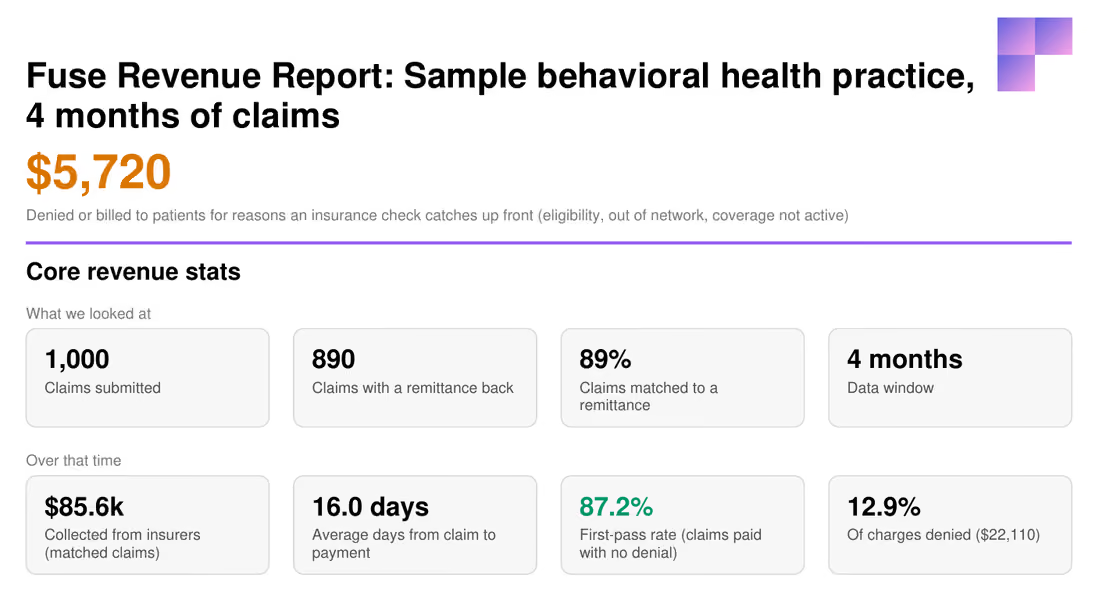
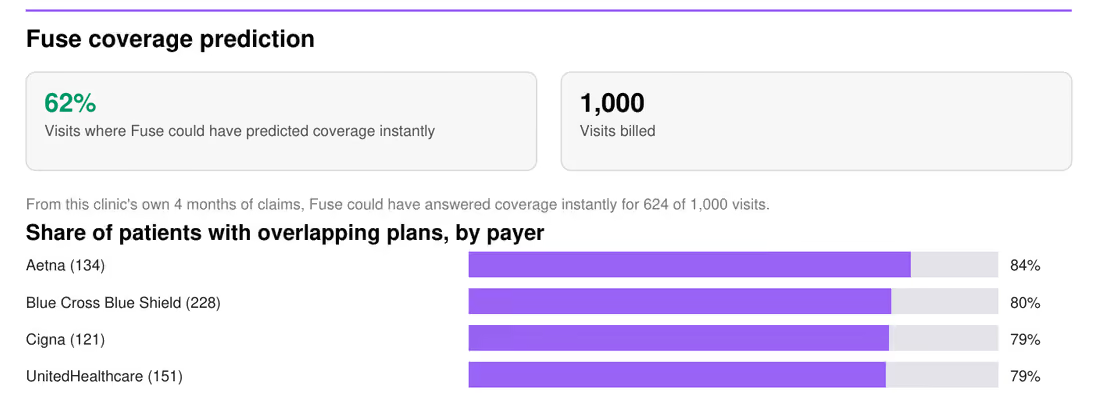

Fuse builds a model of payer behavior from your claims: underpayments flagged, lapsed plans caught, coverage predicted for scheduled patients.
Get Your Free Revenue AnalysisFAQs
Which UnitedHealthcare plans use these Optum behavioral health rates in California?
The Optum behavioral health file is listed in the rate disclosures of UnitedHealthcare of California, which issues UnitedHealthcare's HMO plans in the state, and UnitedHealthcare Benefits Plan of California. Self-funded employer plans that UnitedHealthcare only administers can use separate arrangements, so check the plan on the member's card.
Does UnitedHealthcare pay the same rate for telehealth therapy in California?
For state-regulated plans, it must. California law requires state-regulated health plans and insurers to pay the same rate for a telehealth service as for the same service in person. Self-funded employer plans follow federal law instead, and the state rule does not apply to them.
How do I find my own UnitedHealthcare behavioral health rate?
Start with the fee schedule in your Optum agreement and your remittances, which show what Optum actually paid. Optum's provider site says rates vary by state, license type and network status, and points clinicians to Provider Services at 877-614-0484 for more information. Compare your 90837 rate with the California median of $121.33.