
Insurance Claims Automation That Learns What Each Payer Approves
A majority of claim denials stem from preventable errors, yet most practices still rely on rules-based validation that only catches what it has been told to look for. Industry benchmarks based on HFMA's MAP Keys treat a 95% clean claim rate as best-in-class, but many practices operate in the 75-85% range. The gap between those numbers is lost revenue, wasted staff time and payer relationships that erode one denial at a time.
Fuse delivers medical claims automation that learns payer-specific approval and denial patterns, then applies those patterns across three stages of the revenue cycle: pre-visit verification, pre-submission claim validation and post-denial correction. It runs inside your EMR invisibly, so your team only looks at the dashboard when they need to.
SCHEDULE A DEMO
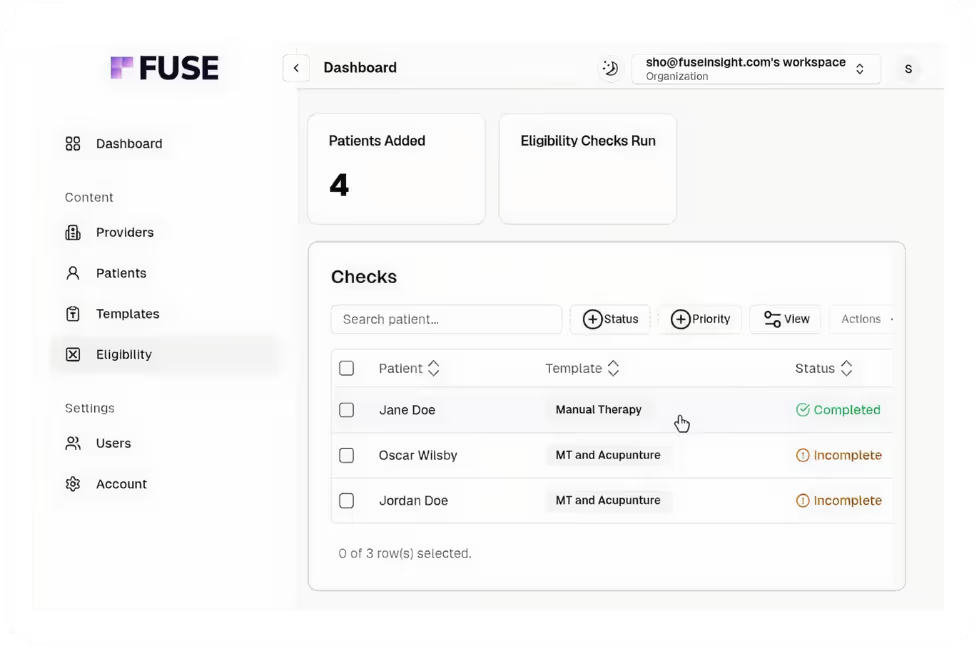









Pre-Visit: Verify Coverage, COB and Prior Auth Before the Patient Arrives
Revenue cycle leaders consistently rank eligibility errors, outdated coordination of benefits and prior authorization problems among the top drivers of claim denials, according to Experian Health's State of Claims 2025 survey. These are problems that surface after the visit and become denials that were entirely avoidable.
Fuse runs three checks that matter for claim denial prevention at this stage. First, a core insurance check confirms active coverage, network status and benefits at the CPT code level. Second, automated payer calls verify coordination of benefits, surface secondary and tertiary coverage that portals miss, catch wrong-primary-payer errors and confirm prior authorization requirements, giving staff time to initiate any PA before the appointment. Third, Fuse analyzes historic adjudicated claims data using machine learning to flag patterns that predict denial risk for the specific payer, plan and procedure combination. When coverage, COB and prior auth are confirmed before the patient arrives, the claim that follows starts clean.
Pre-Submission: Every Claim Reviewed for Denial Risk Before It Reaches the Payer
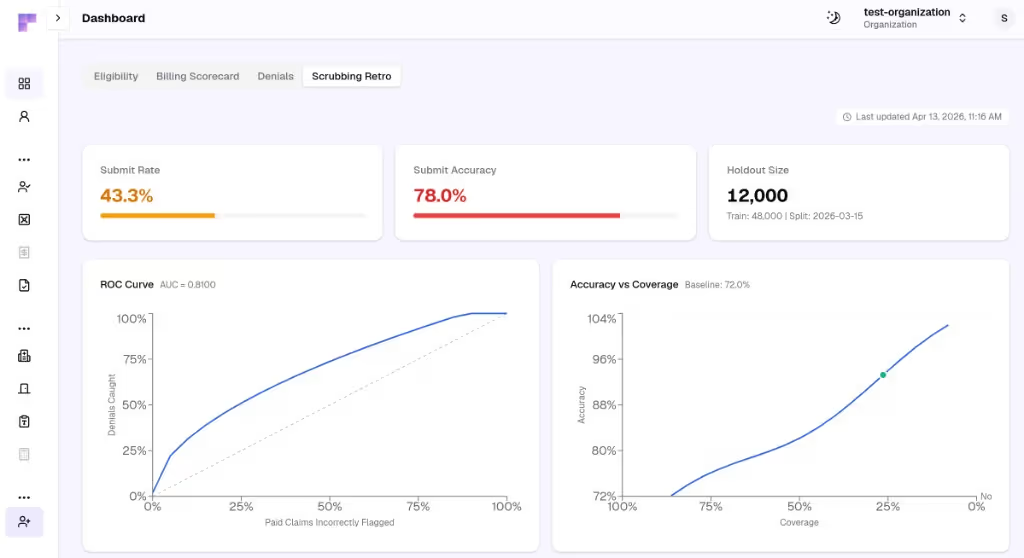
Traditional claim scrubbing workflows rely on static rules that only catch known error types. A rule for missing modifiers will flag a missing modifier, but it will not learn that a specific payer started denying a particular CPT and diagnosis combination last month. Fuse learns from payer-specific denial patterns and scores each claim for denial risk before submission, turning pre-submission claim validation into a living process that adapts as payer behavior changes.
The most common preventable denial triggers at this stage include coding inaccuracies, missing or incorrect modifiers, incomplete claim data and payer rule mismatches, according to MedViz research on denial triggers. Rather than chasing individual denial codes with static rules, Fuse uses machine learning trained on historic adjudication outcomes to score each claim for denial risk across the full range of payer-specific patterns. The key differentiator: this runs invisibly inside the EMR. Fuse integrates directly as a billing user with read/write access to appointments, patient billing accounts and claims. Staff sees their claims worklist getting automatically pushed through, and only needs to check the dashboard when something requires attention. Automated claim scrubbing that learns what each payer approves.
Post-Denial: Auto-Correct, Retry and Escalate Only When Needed
Industry research from DCCS Consulting finds that roughly 35-60% of denied claims are never reworked or resubmitted. At a cost of $25 or more per rework according to AHIMA, many practices lack the staff hours to chase every denial. The result is revenue that was earned but never collected.
Fuse brings denial management automation to this stage. When a claim is denied, Fuse reads the denial reason, auto-corrects the claim where possible and retries submission. When human intervention is required, like a patient with incorrect insurance details that need updating, Fuse escalates to the practice team. Denials return to the EMR where staff already works. The system handles the rework; staff handles the exceptions. Revenue cycle claim automation that closes the loop instead of letting denied claims expire past timely filing deadlines.

Stop Losing Revenue to Preventable Claim Denials
Three stages, one platform that lives inside your EMR. Pre-visit verification catches coverage and authorization issues. Pre-submission review catches coding and payer rule problems. Post-denial automation corrects and retries before revenue is lost. Clean claim rate improvement starts with claims intelligence that learns, not rules that wait to be updated.
SCHEDULE A DEMOFAQs
How Is AI Claims Automation Different from Claim Scrubbing?
Traditional claim scrubbing runs each claim through a fixed set of rules, catching only the error types it has been programmed to find. Medical claims automation with Fuse learns from payer-specific denial and approval patterns over time, so it identifies denial risks that static rules miss. It also auto-corrects and retries denied claims, which standard claim scrubbing software does not do. The result is a higher first pass claim acceptance rate and fewer denials that need manual follow-up.
What Types of Claim Errors Does Fuse Catch Before Submission?
Fuse targets the most common preventable denial triggers: coding inaccuracies, missing or incorrect modifiers, incomplete claim data and payer-specific rule mismatches. It uses machine learning trained on historic adjudication outcomes to score each claim for denial risk across payer-specific patterns, catching problems that fixed-rule claim scrubbing cannot detect.
How Does Pre-Visit Verification Prevent Claim Denials?
Fuse runs three checks before the appointment. First, it confirms active coverage, network status and benefits at the CPT code level. Second, automated payer calls verify coordination of benefits, surface secondary and tertiary coverage that portals miss, catch wrong-primary-payer errors and confirm prior authorization requirements, giving staff time to initiate any PA before the visit. Third, machine learning on historic adjudicated claims data flags patterns that predict denial risk for the specific payer, plan and procedure combination. When coverage, COB and prior auth are resolved before the patient arrives, the claim starts clean.
What Happens When a Claim Is Denied?
Fuse reads the denial reason, auto-corrects the claim where possible and retries submission. When human intervention is required, such as a patient whose insurance details need updating, Fuse escalates to the practice team inside the EMR where staff already works. The system handles the rework; staff handles the exceptions. This denial management automation ensures denied claims are addressed before timely filing deadlines expire.
How Does Fuse Integrate with My EMR?
Fuse integrates directly with your EMR as a billing user with read/write access to appointments, patient billing accounts and claims. There is no clearinghouse integration and no new worklist to manage. Claims are reviewed, scrubbed and pushed through automatically inside the system your staff already uses. Fuse provides a dashboard for visibility, but staff only needs to check it when something requires attention. Medical claim scrubbing software that works where your team works.