
Automate Insurance Checks and Save Hours Per Patient
Manual insurance verification is painful, prone to errors and causes delays to patient intake, while causing costly claim denials when done wrong. A single manual check can take billing teams anywhere from 15 minutes to 2 hours between EMR lookups, payer portals and hold music, and eligibility-related errors can account for up to 50% of all denials.
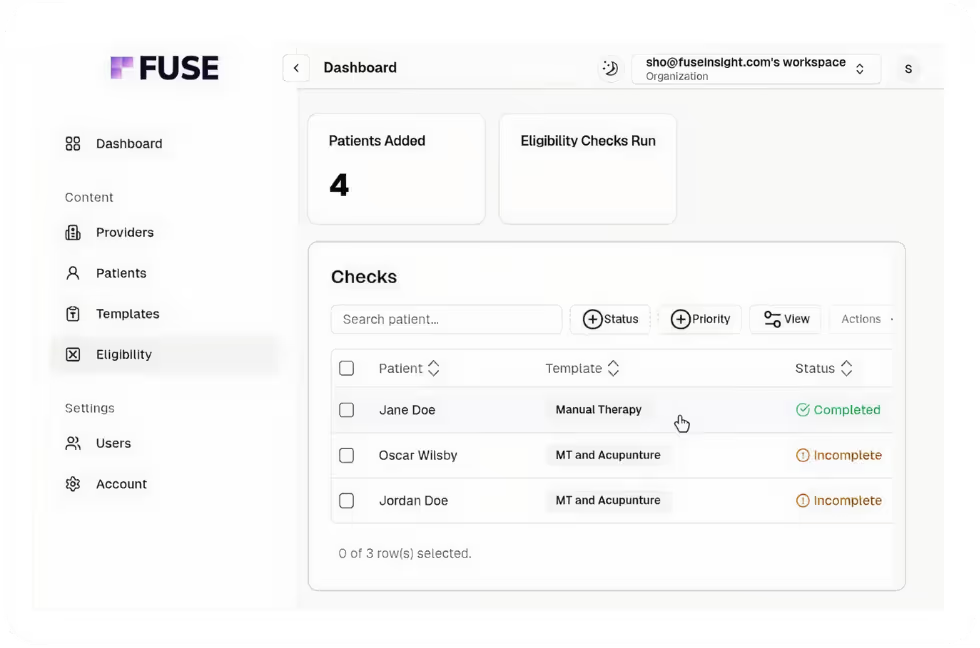
Fuse checks every patient's coverage before every appointment, so lapsed plans never reach your front desk or your claims. Where the procedure demands it, Fuse verifies at the CPT code level with CPT-level benefits verification, and when portals cannot answer, Fuse calls the payer to confirm code coverage and prior auth requirements before the visit.










Why Manual Insurance Verification Drains Staff Hours
The average manual benefits check takes about 30 minutes: extracting data from the EMR, checking portals, calling payers and adding a benefits note back to the patient account. Multiply that across a full schedule and verification becomes one of the biggest hidden costs in the practice.
Worse, manual checks still miss things. Portals like Availity, pVerify or Office Ally often show only general eligibility, so procedure-specific copays, visit limits and prior authorization requirements slip through, and those misses surface later as denied claims and surprised patients.
How Automated Insurance Verification
Software Works
Checks run automatically from your schedule, so every patient is verified before every appointment and lapsed plans never reach your front desk. Billing summaries and verification results are auto-generated, confirming coverage details and network status before visits. What used to take your team 30 minutes per patient now happens automatically, through a three-layered approach that combines payer portals, direct payer calls and adjudicated claims data.
Insurance eligibility verification at the CPT level
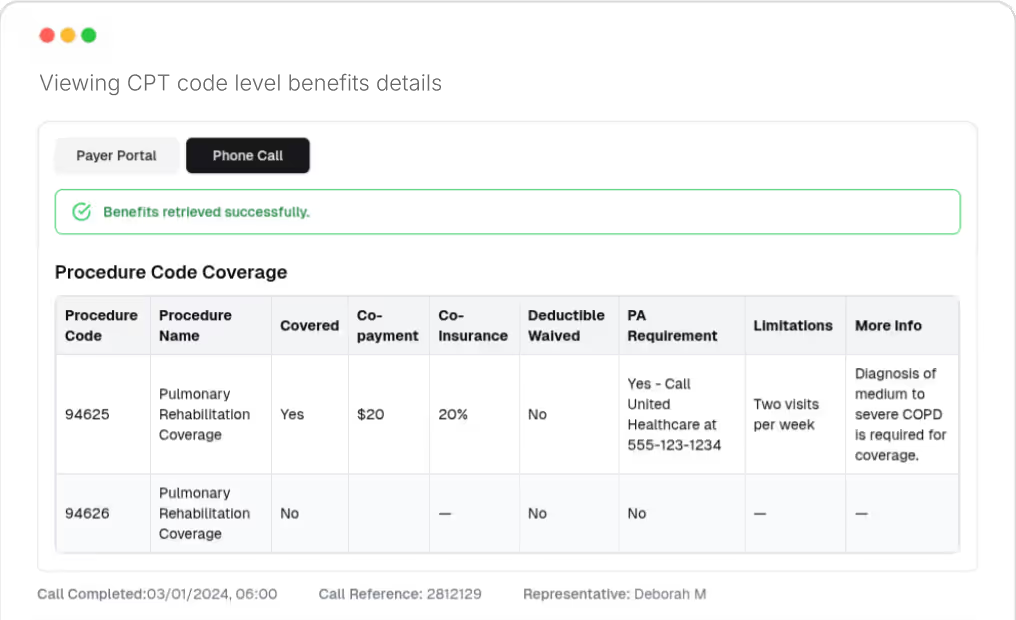
Basic eligibility checks miss critical coverage details that cause claim denials. Fuse verifies benefits at the CPT code level, ensuring you know exactly what's covered for each procedure before appointments, such as exact copays, coinsurance, visit limits and prior auth requirements.
Portal checks plus payer calls for maximum accuracy
Payer portals provide basic information, but direct calls and adjudicated claims data reveal specifics like prior authorization requirements and visit limits at the CPT code level. Fuse takes a three-layered approach by combining portals, calls and claims data to deliver complete, accurate benefits verification every time. When portal and call results disagree, the discrepancy is flagged for review in Fuse's dashboard. Adjudicated claims record what the payer actually did, so when the claims model already has the answer, Fuse answers from claims data and saves the call for what portals and claims cannot show.
Network status confirmation
Get confirmation of network status and coverage details before appointments through automated payer phone calls and our adjudicated claims model. Portal checks cannot confirm network status for most payers, and niche plans like self-insured plans run by a TPA are especially hard to pin down. Fuse's direct calls prevent out-of-network surprises and give patients upfront cost clarity they can trust.
From Eligibility Check to Verified Benefits Summary
Every check ends with a clear, structured summary of the patient's benefits: coverage status, copay, coinsurance, deductible position, visit limits and prior authorization requirements for each planned procedure. The summary can be added straight into your EMR, so the whole team works from the same verified data.
Over time, Fuse remembers results for each payer and plan combination, making every subsequent verification faster and more accurate, and reducing errors by up to 95% compared to manual lookups.

Fuse automates:
- Payer portal checks and direct payer phone calls
- CPT-level benefits verification and network status confirmation
- Benefits summaries ready to add to your EMR

The Payoff: Fewer Denials and Faster Intake
Automating eligibility checks pays off in three places. It eliminates the admin overhead of manual benefits checks, which can take up to 30 minutes per patient. It prevents eligibility-related denials, which can account for up to 50% of all denials, including missed prior auth requirements and billing outdated insurance. And faster checks increase the speed and volume of patient intake, helping grow revenue.
It also quiets the phones: patients call to ask whether a service is covered and what they'll owe. With verified, CPT-level answers ready before the appointment, your front desk shares accurate coverage and cost information proactively instead of fielding the same calls all day.
HIPAA-Compliant Healthcare Automation Platform




Get Insurance Verification Right the First Time
Verified benefits power everything downstream: granular CPT-level benefits data feeds accurate patient cost estimates, catches coverage issues that cause eligibility denials, and starts working the moment details are captured at patient intake.
Schedule a demo to see how Fuse verifies benefits automatically and gives your team hours back on every patient.
FAQs
How does CPT code level verification improve accuracy?
Fuse's CPT code level verification checks benefits for each specific procedure, not just general eligibility and coverage by STC (Service Type Code). This prevents claim denials caused by missing coverage details or authorization requirements for the specific procedure. Fuse identifies the exact copays and coinsurance that a patient must pay for each procedure, which often cannot be determined on portals like Availity, pVerify or Office Ally. These platforms may only state what a specialist visit copay is and fall short of specifying the exact copay for an initial visit with a psychiatrist, or show multiple copay options.
Why combine portal checks with payer calls?
Portal data is current but often incomplete: it typically lacks CPT-level benefits and prior authorization requirements. Fuse places automated payer calls to fill those gaps, confirming plan status, code-level coverage, prior authorization requirements, visit limits, and the copays and coinsurance that apply to that specific CPT code before the appointment. Payer calls can also help determine whether the billing provider is seen as a specialist by the specific payer and how that classification impacts patient benefits. Fuse also analyzes adjudicated claims data at the payer plan level, remembering results for each payer and plan combination to improve accuracy over time. Fuse uses all three methods to ensure complete, accurate benefits verification.
How are payer discrepancies identified and resolved?
Fuse compares portal and call results to identify inconsistencies. Discrepancies are flagged for review in Fuse's dashboard and in the summary Fuse produces for each check that can be inputted into your EMR. Discrepancies typically occur when a payer rep provides incorrect benefits information. In these instances, follow-up calls can be scheduled to clarify the correct benefit details.
Can this system identify coverage limitations?
Yes, Fuse identifies coverage limitations, prior authorization requirements, and visit limits at the CPT code level, reducing costly eligibility-related claims denials by pulling detailed benefit information from both payer portals and direct calls.
How can network status be confirmed?
Fuse uses direct verification calls to confirm network status because portal checks cannot confirm network status for most payers. While most practices have a sense of which plans they are in-network with, confirming network status for niche plans like self-insured plans run by a TPA can be difficult. Fuse's direct calls ensure there are no surprises when claims are adjudicated and patients need to be billed for rendered services.
How much time can I save by automating benefits checks?
Fuse automates the entire eligibility and benefits check process, reducing administrative time by up to 95%. Manual checks can take billing teams anywhere from 15 minutes to 2 hours depending on data complexity and payer hold times, averaging about 30 minutes. That manual work includes extracting data from the EMR, checking portals, calling payers, and adding a benefits note back to the patient account. Fuse's automation means significant time and workload savings for billing teams.
What is the financial benefit of automating benefits checks?
Fuse delivers financial benefits in three areas. First, Fuse eliminates admin overhead from manual benefits checks, which can take up to 30 minutes per patient. Second, Fuse prevents eligibility-related denials, which can account for up to 50% of all denials. These include missed prior auth requirements and billing outdated insurance for patients who recently switched employers. Third, faster checks through Fuse can increase the speed and volume of patient intake and help grow revenue. The exact dollar benefit depends on each practice and patient volume.
How does insurance verification reduce patient phone calls?
Patients typically call practices to find out if a specific service is covered and what they'll pay out of pocket. Fuse's automated insurance verification answers these questions before the appointment by checking both payer portals and making direct payer calls. This gives your front desk accurate coverage and cost information to share proactively, eliminating the back-and-forth calls that consume staff time.
Can insurance verification determine patient out-of-pocket costs for specific procedures?
Yes, Fuse calculates exact patient responsibility for each CPT code by verifying coverage status, deductible amounts, copays, and coinsurance through automated portal checks, payer calls, and adjudicated claims data at the payer plan level. This includes confirming whether the patient is in or out of network, which directly affects their cost. Patients get accurate cost estimates before their appointment rather than surprises after services are rendered.