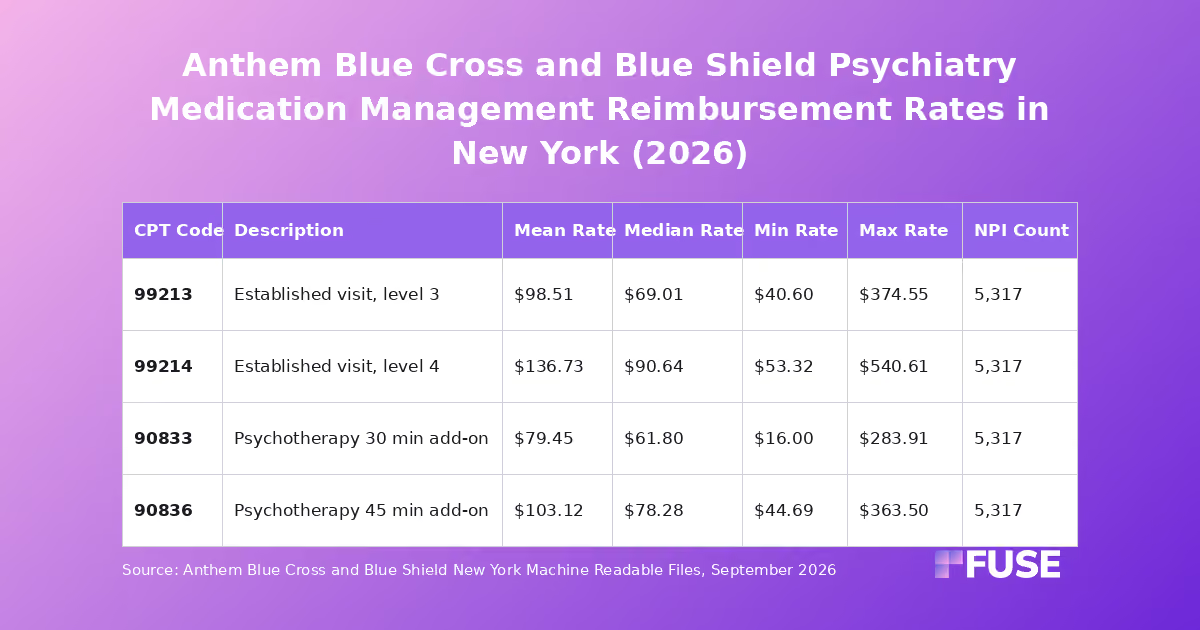
Anthem Blue Cross and Blue Shield Psychiatry Medication Management Reimbursement Rates in New York (2026)
Anthem Blue Cross and Blue Shield pays New York psychiatric prescribers a median of $90.64 for a level 4 follow-up visit. New York Medicaid pays physicians $121.96 for the same visit.
These figures come from five Anthem New York network files dated September 2026, 51 gigabytes of pricing data. They cover Anthem’s BlueAccess large-group PPO, its EPO and small-group EPO, and its Connection small-group and large-group networks. We kept office rates on professional claims. We matched each NPI to the federal NPPES registry and kept psychiatrists and psychiatric nurse practitioners who practice in New York. Each statistic counts a provider and a rate once.
Anthem’s Negotiated Medication Management Rates in New York
The table uses September 2026 data. 99213 and 99214 are the evaluation and management (E/M) visit codes for an established patient. 90833 and 90836 are psychotherapy add-ons, billed only with an E/M visit.
| CPT Code | Description | Mean Negotiated Rate | Median Negotiated Rate | Min | Max | Unique NPI Count |
|---|---|---|---|---|---|---|
| 99213 | Office/outpatient visit, established patient, low medical decision making or 20-29 minutes total time | $98.51 | $69.01 | $40.60 | $374.55 | 5,317 |
| 99214 | Office/outpatient visit, established patient, moderate medical decision making or 30-39 minutes total time | $136.73 | $90.64 | $53.32 | $540.61 | 5,317 |
| 90833 | Psychotherapy, 30 minutes with patient, when performed with an evaluation and management service (add-on) | $79.45 | $61.80 | $16.00 | $283.91 | 5,317 |
| 90836 | Psychotherapy, 45 minutes with patient, when performed with an evaluation and management service (add-on) | $103.12 | $78.28 | $44.69 | $363.50 | 5,317 |
Rates extracted from Anthem’s September 2026 New York machine readable files for the five networks named above.
What Does Anthem Pay for a Medication Management Visit in New York?
At the medians, Anthem pays about $152.44 for 99214 with 90833, and about $130.81 for 99213 with 90833. The add-on is a large share of that total. Its median of $61.80 is about two thirds of the 99214 median.
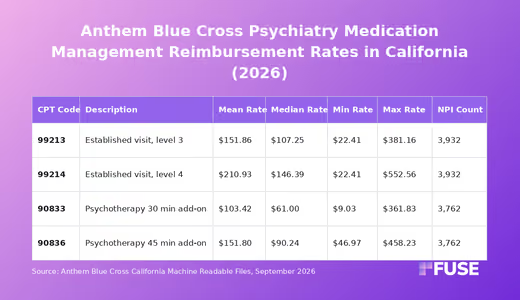
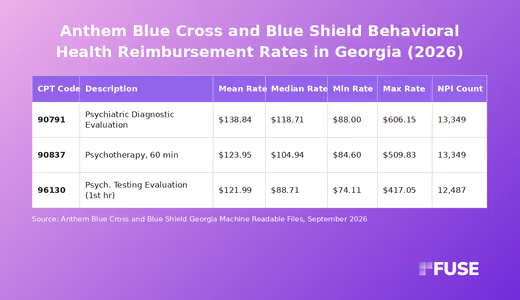
New York pays well below California for the same work. Anthem’s California median for 99214 is $146.39, from its September 2026 file, so the New York median is about 38 percent lower. Our Anthem psychiatry medication management rates in California page has the full California table.
The five networks barely differ at the middle. Four have a 99214 median of $90.64. The EPO network’s median is $92.40.
Does Anthem Pay Less Than Medicaid for Psychiatry Visits in New York?
Yes, at the median, on all four codes. These are New York Medicaid’s office fees for physicians, effective July 1, 2026:
- 99213. Medicaid $86.75, Anthem median $69.01.
- 99214. Medicaid $121.96, Anthem median $90.64.
- 90833. Medicaid $76.65, Anthem median $61.80.
- 90836. Medicaid $96.55, Anthem median $78.28.
Anthem’s 99214 median is about 26 percent below Medicaid’s fee. A level 4 visit with 90833 pays about $199 under the Medicaid schedule and about $152.44 at Anthem’s medians. For 2,191 of the 5,317 prescribers we matched, about 41 percent, every 99214 rate Anthem lists is below the Medicaid fee.
These Medicaid figures are the fee-for-service maximums on the eMedNY physician fee schedules, checked October 7, 2026. Medicaid managed care plans set their own rates. Even so, a commercial rate below the state’s own Medicaid fee is a fair point to raise when you negotiate, and it comes from Anthem’s published files.
Why Do New York Psychiatric Prescribers Get Such Different Anthem Rates?
The files tie each rate to billing IDs, the IDs of the groups and practices that bill claims, not to the clinician. Most New York prescribers sit on a handful of 99214 schedules:
- $70.68. 2,464 prescribers, in the EPO and small-group EPO networks.
- $83.16. 2,372 prescribers, in the large-group PPO, EPO and small-group EPO networks.
- $90.64. 2,012 prescribers. It is also the median.
- $92.40. 1,835 prescribers, mostly in the EPO network.
The same clinician can appear on several schedules, often one per network. 1,371 prescribers carry a 99214 rate at or below $90.64 and another at $150 or more. The files do not say which claims pay which rate.
Which Groups Get the Highest Anthem Rates in New York?
The three largest high-rate contracts belong to companies that credential clinicians under their own billing IDs. Each pays about twice the median for 99214:
- Headway, $187.24. It covers 1,172 New York prescribers, in the PPO, EPO and small-group EPO networks.
- Talkiatry, $192.53. It covers 280 prescribers, in the small-group EPO and EPO networks.
- Alma, $162.00. It covers 227 prescribers, in the EPO and small-group EPO networks.
We matched each billing ID to the company through the company’s own documents and public records. These are the rates Anthem pays the company. Clinicians who see patients through Headway, Talkiatry or Alma are paid under their own agreements with that company, which keeps a share. We did not find a published share for any of the three.
The gap per visit is still large. A 99214 with 90833 pays about $119 on the $70.68 schedule and about $287 on Headway’s contract.
Do Psychiatric Nurse Practitioners Get Lower Anthem Rates in New York?
Yes, by about 10 percent at the median. Across the five networks, nurse practitioners have a 99214 median of $83.16 against $92.40 for psychiatrists, and the gap is the same on the other three codes. The files show the rates but not the reason for the gap.
Does Anthem Pay the Same Rate for Telehealth Medication Management in New York?
Yes, for plans New York regulates. Insurance Law section 3217-h requires insurers to pay telehealth “on the same basis, at the same rate, and to the same extent” as the same service in person. Public Health Law section 4406-g sets the same rule for HMOs.
A few limits apply:
- Unused facility costs. The plan does not have to pay facility charges when neither the patient nor the clinician is at the facility.
- Cost sharing. Copays and deductibles for telehealth must be at least as favorable to the patient as in person.
- Self-funded plans. State insurance law does not reach employer plans that pay their own claims, so check how the plan is funded.
- End date. Both payment parity rules expire April 1, 2028. We checked the current text on October 7, 2026.
Our Anthem behavioral health rates in New York page covers the therapy codes billed without a medication visit.
How Do You Choose the Visit Level for Anthem When You Bill a Psychotherapy Add-On?
Choose it on medical decision making, because the psychotherapy minutes cannot also count toward the visit level. The add-on itself goes by psychotherapy minutes alone:
- Under 16 minutes, bill no add-on.
- From 16 to 37 minutes, bill 90833.
- From 38 to 52 minutes, bill 90836.
Anthem’s New York commercial policy on E/M documentation, C-09007, was last approved September 11, 2025. It uses the 2021 AMA table for medical decision making to set the level. A visit coded by time needs the exact minutes in the note, not a range. If the time documentation falls short, Anthem reviews the claim on decision making instead. So write the problems you addressed, the data you reviewed and the risk of your treatment choice. That is what supports a 99214 when the add-on is billed.
What Does New York’s Behavioral Health Wait-Time Rule Mean for Anthem Prescribers?
It means Anthem’s network must have room to offer a first behavioral health appointment within 10 business days. The rule is 11 NYCRR Part 38 for insurers and 10 NYCRR 98-5.5 for HMOs. Both apply to policies issued or renewed on or after July 1, 2025.
When a patient cannot get an appointment in time, the rule sets out the steps:
- The patient files an access complaint with the plan.
- The plan has three business days to find an in-network clinician who can see the patient in time.
- If it cannot, the plan must approve a referral to an out-of-network clinician. The patient pays the in-network cost share.
The out-of-network clinician must meet the wait time and charge rates that are “not excessive or unreasonable.” The rule does not set a payment amount. Telehealth visits count unless the patient asks to be seen in person. Plans must also review claims every six months and contact in-network behavioral health clinicians who billed nothing, to confirm they still see patients. If your practice can see new Anthem patients within 10 business days, say so when you ask for a better rate.
What This Means for Your Practice
These numbers cover five of Anthem’s New York networks, about 99 percent of the New York plan listings in Anthem’s index. Anthem’s New York index also lists an individual-network file. Every plan it names is an individual plan in another state, so we left it out. Even with the five networks, the files cannot tell you which rate pays your claims.
Your own remittances can. Three checks are worth doing:
- Find your schedule. Compare your 99214 allowed amount with $70.68, $83.16, $90.64 and $92.40.
- Compare by network and billing group. The same clinician can sit on different schedules in different networks, so compare allowed amounts for each.
- Compare with the high contracts. If you see patients through Headway, Talkiatry or Alma, weigh your share against what Anthem pays you directly.
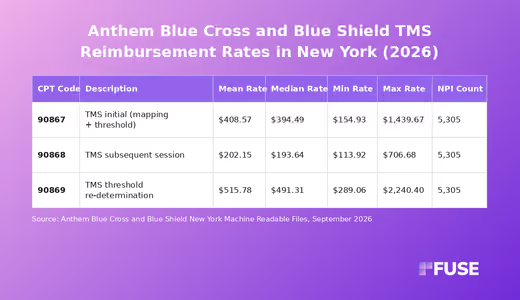
Our guide to negotiating insurance contract rates covers how to turn those findings into a rate request. Prescribers who also offer TMS can compare Anthem’s TMS rates in New York.
Fuse can help with this work. We check your past claims against your contracted rates and flag the gap between contracted and paid before it grows. Reach out if you want a second look at your Anthem numbers.
Disclaimer: This article uses rate information from the Machine Readable Files that Anthem Blue Cross and Blue Shield publishes under the federal Transparency in Coverage rule. These files are posted to satisfy the regulation, not to be read. The files behind this analysis unpack to 51 gigabytes of raw pricing data that no spreadsheet can open. Fuse built its own software to extract and verify the figures above. This analysis focuses on a single payer and five of its New York networks, and will not reflect rates from all available insurance options in New York. Fuse makes every effort to provide accurate and current information, but healthcare pricing and coverage policy change frequently, and individual circumstances affect actual payment. This information does not guarantee specific pricing. Practices should verify current rates and criteria directly with Anthem before relying on them for billing or negotiation decisions.
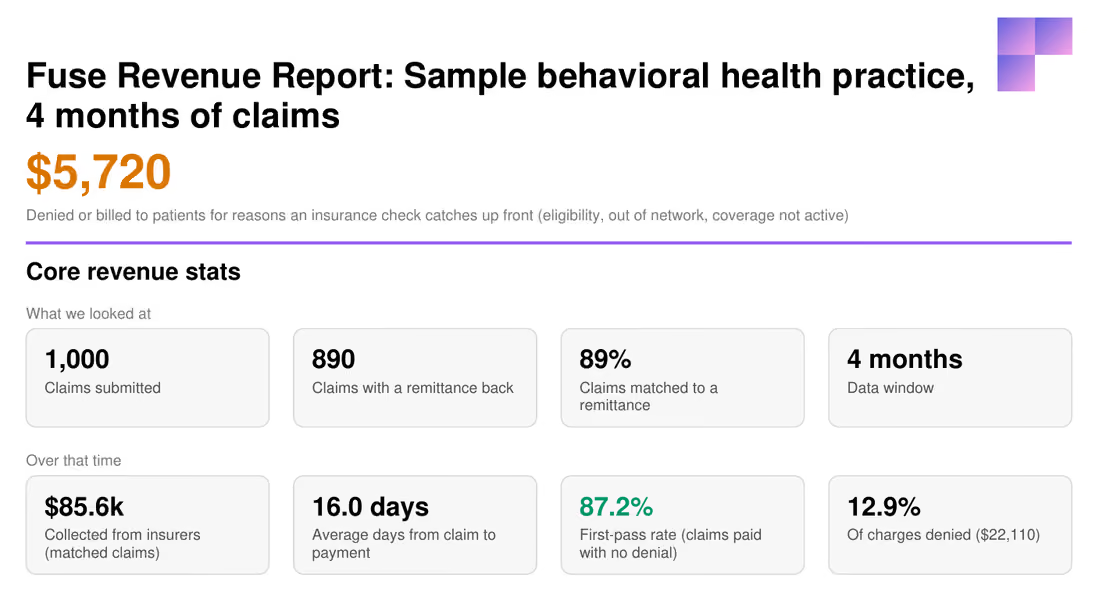
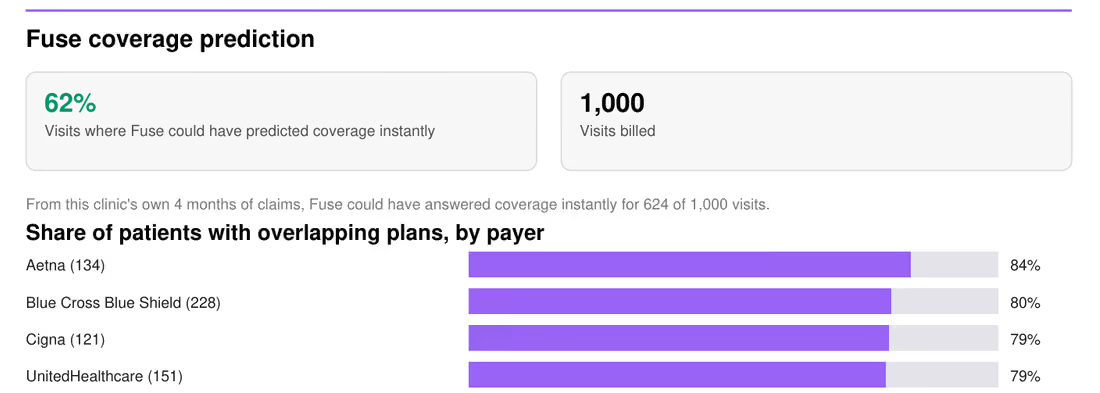

Fuse builds a model of payer behavior from your claims: underpayments flagged, lapsed plans caught, coverage predicted for scheduled patients.
Get Your Free Revenue AnalysisFAQs
Why do Anthem's New York rate files still say Empire BlueCross BlueShield?
The files still carry the old Empire name, but they are Anthem's New York rates. Anthem's own New York policies describe Anthem Blue Cross and Blue Shield as the trade name of Anthem HealthChoice HMO, Inc. and Anthem HealthChoice Assurance, Inc., the companies that used to operate as Empire. A contract or remittance that says Empire refers to the same plans.
Which Anthem networks does this New York rate data cover?
Five. They are Anthem's BlueAccess large-group PPO, its EPO and small-group EPO, and its Connection small-group and large-group networks. They carry about 99 percent of the New York plan listings in Anthem's index. We left out an individual-network file because every plan it names is an individual plan in another state.