Anthem Blue Cross and Blue Shield TMS Reimbursement Rates in Colorado (2026)
Anthem Blue Cross and Blue Shield’s median Colorado rate for a TMS treatment session is $255.00, and most prescribers are paid one of two rates. Which one you have changes each course by about $2,100.
We read the October 2026 Colorado network file that covers the most Anthem plans, 1.3 gigabytes once unzipped. We kept dollar rates for professional claims in the office setting and left out percent-of-charge and per-diem rows. We then kept the 1,352 psychiatrists and psychiatric nurse practitioners who practice in Colorado, according to the federal NPI registry. A clinician listed under several plans at the same rate is counted once.
What Does Anthem Pay for TMS in Colorado?
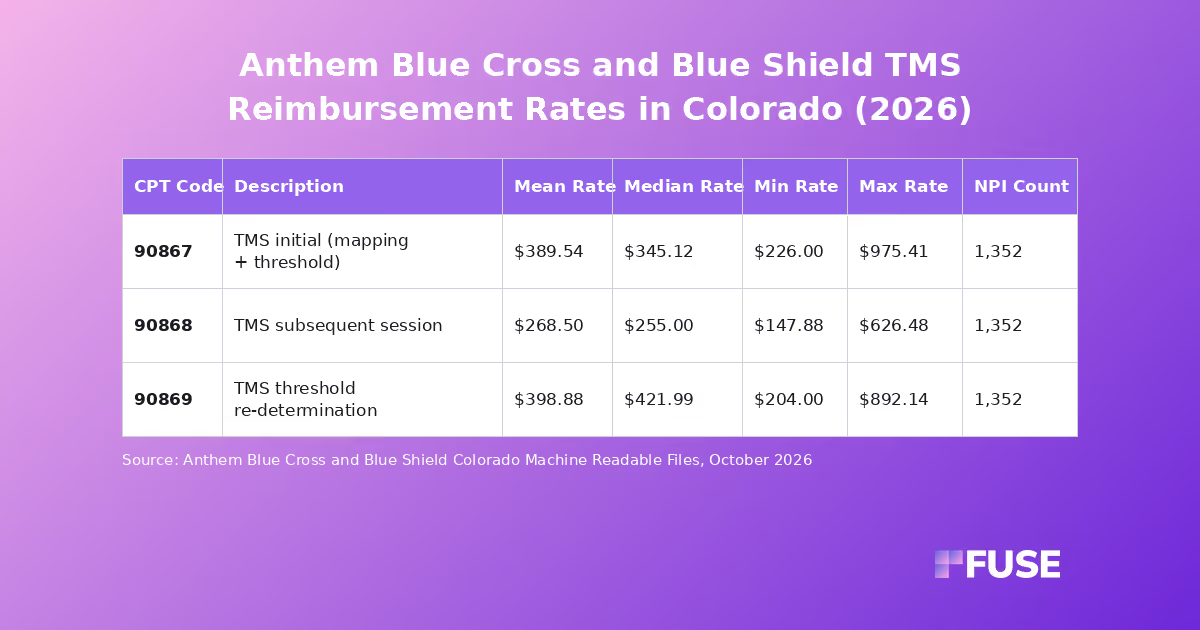
The median is $345.12 for the first session with mapping and $255.00 for each treatment session after it.
| CPT Code | Description | Mean Negotiated Rate | Median Negotiated Rate | Min | Max | Unique NPI Count |
|---|---|---|---|---|---|---|
| 90867 | TMS treatment, initial, including cortical mapping, motor threshold determination, delivery and management | $389.54 | $345.12 | $226.00 | $975.41 | 1,352 |
| 90868 | TMS treatment, subsequent delivery and management, per session | $268.50 | $255.00 | $147.88 | $626.48 | 1,352 |
| 90869 | TMS treatment, subsequent motor threshold re-determination with delivery and management | $398.88 | $421.99 | $204.00 | $892.14 | 1,352 |
Rates from Anthem’s October 2026 Colorado machine readable file.
Which Anthem TMS Rate Are You On?
Nearly three in four Colorado prescribers in the file are paid either $300 or $237 per treatment session. The $300 group mostly gets $345.12 for the first session. The $237 group gets a higher $432 for the first session, which does not close the gap. Over one first session and 35 treatment sessions, the $300 contract pays about $10,845 and the $237 contract about $8,727. That is roughly $2,100 less per patient for the same course. A smaller set of contracts pays under $200 per session, or about $7,000 per course.
How Does Anthem’s TMS Rate Compare With Colorado Cash Prices?
At the medians, a full course pays about $9,270.12 per patient, well above what Colorado clinics charge patients who pay cash. A Denver psychiatry practice charges $3,800 for a standard 36-session course, including follow-up visits. A group with several Denver-area offices charges $5,500 for 36 deep TMS sessions, and a Broomfield TMS clinic charges $6,000 prepaid (all checked September 30, 2026). Even Anthem’s lower common contract pays more than any of them.
Run your own numbers with your contracted rates:
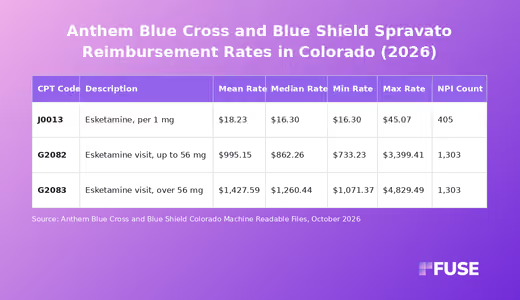
Practices that also offer esketamine can see Anthem’s Spravato rates in Colorado, built from the same file.
What Does Anthem Require Before Approving TMS?
Anthem requires prior authorization, and its TMS request form shows what reviewers look for. It is a multi-state form, revised September 1, 2024, that names Anthem’s Colorado companies in its footer. It asks for:
- a patient 18 or older
- severe major depressive disorder that has not responded to treatment
- a poor response to antidepressants from at least two classes at an adequate dose and length, or side effects that ended two trials
- an FDA-approved device
- a course of up to five days a week for six weeks, 30 sessions, followed by a taper
The form asks separately whether a request is for maintenance TMS after remission or a continuation course, so expect those requests to get a closer look.
Does Colorado Law Change How Anthem Reviews TMS?
It can for state-regulated plans. Since January 1, 2026, Colorado’s HB25-1002 requires every mental health utilization review to be consistent with generally accepted standards of care. Where no nonprofit specialty group’s criteria cover a service, any criteria a plan buys or licenses must be checked and documented against that standard before use. We found no Anthem Colorado notice changing its TMS criteria as of September 30, 2026. If a state-regulated member is denied, ask which criteria the reviewer used and cite the law in your appeal. A “CO-DOI” mark on the member’s ID card means the plan is state-regulated. Self-funded employer plans without it follow federal rules instead.
Does Health First Colorado Cover TMS?
We could not find coverage. The TMS codes do not appear in Health First Colorado’s April 2026 behavioral health billing manual, which does list electroconvulsive therapy, and a large Denver-area TMS group tells patients Medicaid does not pay for it. Commercial members and Medicare patients are the realistic referral base.
What This Means for Your Practice
Compare your own Anthem rates with these medians to see whether your contract is fair. If your treatment sessions pay $237 or less, you are on the lower of Anthem’s two common rates.
If your rates are low, the $300 rate that about half of Colorado prescribers in the file already get is a concrete number to bring to a rate request. Our guide to negotiating insurance contract rates covers how to make the ask.
Once good rates are in place, Fuse helps make sure you actually get paid them. We check claims against your contracted rates and confirm each patient’s coverage before the first session. Reach out if you’d like to chat.
Disclaimer: This article uses rate information from the Machine Readable Files that Anthem Blue Cross and Blue Shield publishes under the federal Transparency in Coverage rule. These files are posted to satisfy the regulation, not to be read. The file behind this analysis unpacks to 1.3 gigabytes of raw pricing data that no spreadsheet can open. Fuse built its own software to extract and verify the figures above. This analysis focuses on a single payer and will not reflect rates from all available insurance options in Colorado. Fuse makes every effort to provide accurate and current information, but healthcare pricing and coverage policy change frequently, and individual circumstances affect actual payment. This information does not guarantee specific pricing. Practices should verify current rates and criteria directly with Anthem before relying on them for billing or negotiation decisions.
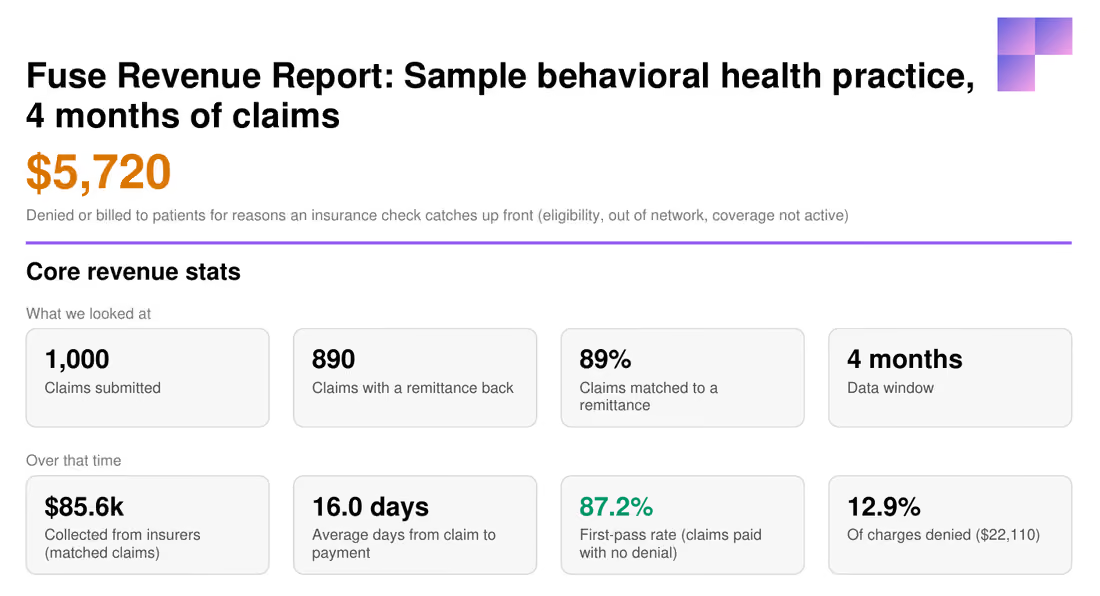
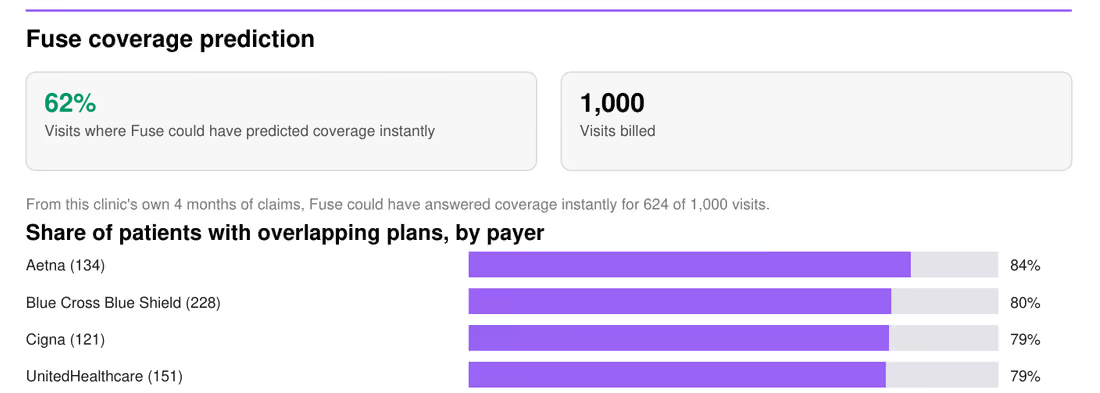

Fuse analyzes your claims data to estimate how many patients could be eligible, benchmarks your contracted rates against the market medians, and sizes the revenue uplift.
Get Your Free AnalysisFAQs
What does Anthem pay for TMS in Colorado?
In Anthem's October 2026 Colorado file, the median is $255.00 per treatment session (CPT 90868) and $345.12 for the first session with mapping (CPT 90867). Nearly three in four Colorado prescribers in the file are paid either $300 or $237 per session.
What does a full TMS course pay under Anthem in Colorado?
One first session and 35 treatment sessions come to about $9,270.12 at the Colorado medians. On the two most common contracts, the same course pays about $10,845 or $8,727.
Does Anthem require prior authorization for TMS in Colorado?
Yes. Anthem's TMS request form, which covers its Colorado plans, asks for severe major depressive disorder in a patient 18 or older, a poor response to antidepressants from at least two classes, and a course of up to 30 sessions over six weeks followed by a taper.
Does Medicare cover TMS in Colorado?
Yes. Novitas, Colorado's Medicare contractor, covers TMS for severe major depressive disorder under local coverage determination L34998. The patient must have failed or not tolerated at least one medication trial, and a psychiatrist (MD or DO) who examined the patient in person must write the order.
Does Health First Colorado cover TMS?
We could not find coverage. The TMS codes do not appear in Health First Colorado's April 2026 behavioral health billing manual, which does list electroconvulsive therapy.